A selection of films that reflect the core of Ronteltap's research into culture, history and urban transformation.
HOLLAND POP 1970 (2024)
More than 50 years ago, the Holland Pop Festival took place in the Kralingse Bos in Rotterdam. Known as Europe's answer to Woodstock, this festival was a milestone in European music history. It was the first large-scale event in Europe where visitors could also spend the night on the festival site.
Nearly 100,000 people gathered on the festival site for three days, driven by an atmosphere of love, peace and happiness, to listen to legendary bands such as Santana, Jefferson Airplane and Pink Floyd. In this documentary about this historic event, the former organizers are interviewed and Ferri Ronteltap collects archive images to paint a vivid picture of this special period in the history of music.
recensies: Volkskrant. # Filmkrant # Oor # Written in Music #. Highlife
Scenario 'the disease called Curaçao' (working title) 2019
The disease called Curaçao is a social realistic drama that takes place on a colonised island.
A social story about a white general practitioner whose social beliefs come under pressure when the interests of a multinational, led from his home country, conflict.
The story takes place on the island of Curaçao, sometime in the second half of the twentieth century.
HORTENSE ET LAURINDA VONT EN HOLLANDE (2020)
een Film van TJITTE DE VRIES en ATI MUL
productie: Ferri Ronteltap
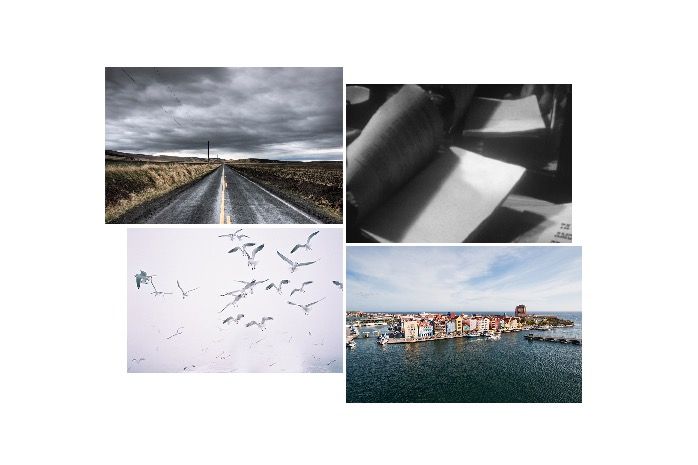
This film by film critic and director Tjitte de Vries was shot in Rotterdam in 1980, at which time I was involved in the project as production manager.
The widow of Tjitte de Vries; After his death (2015), Ati Mul asked me to view the material on a number of 16 mm film rolls.
Tjitte never answered the question why the film was never completed. Inquiries with his widow revealed that he did not have the means, but it has always been a wish that this film could one day find its audience.
Given the historical value of this material, these reels have been digitized in the Eye Film Museum. The Eye Film Museum is renowned worldwide for its knowledge and expertise in the field of film restoration and research and the final film will therefore be included in the collection.
After the digitization process was completed, I edited the film based on the original screenplay and the rest of the post-production takes place with today's technology. (sound, color, titles)
The film tells the story of film director Nikolai van der Heyde and poet Jan Eijkelboom, who talk to each other about the creative process.
Below this audio track we see two women (Hortense et Laurinda) moving through Rotterdam in 1980.
Mediawand - Rotterdamse Schouwburg 2011 / 2021
From 2011 to 2021 as curator and final director responsible for the Mediawand — a digital stage — of Theater Rotterdam (formerly Rotterdamse Schouwburg).
PARADE (2014)
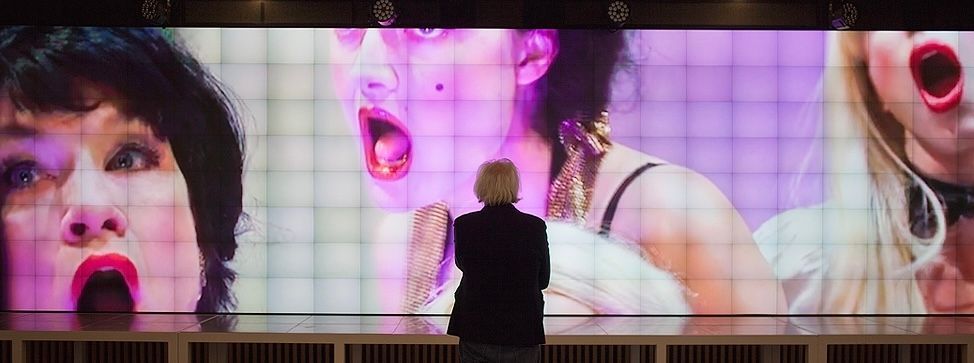
The documentary is about the mystery of the Parade.
According to me, the secret of the Parade lies in its power of attraction.
The lure of an organizer Terce Brinkhoff to realize his dream, the lure of the creative team andof the municipalities to entice them to work, and finally the envy of the performing artists / performers who put everything in power to lure their audience.
The film switches between different perspectives, the ones of the board, of the creator, of the employees and of the various emergent creators.
Rotterdam an attraction ?! (2022)
"Rotterdam an attraction?! is an exhibition and film about eighty years of tourism. An educational and festive trip from the past to the present.
In the film, viewers are swept up in the cultural and touristic tour de force of Rotterdam. From the devastating bombardment to the present day, a whole world of events, festivals, and modern architecture unfolds before your eyes."
De voetballer (2012)
De voetballer is a concept which is about moving. Moving from the immobility.
The immobility of a frozen artwork such as "Chatbot, de voetballer".
With Conny Janssen, Hugo Borst, en Soufiane Touzani.
In collaboration with the Chabot Museum.
CHABOT DE OORLOGSCOLLECTIE 2019
What do we want? The beauty! Fierce and varied, a lump of idealism, us want a wedge in the chaos, build on the ruins, a non-participation the destruction.
We will find our strength in the beautiful.
Henk Chabot in: Bulletin 1 of Rotterdam artist group R33, 1933
1000 jaar Rotterdam (2012)
Media presentation of the history of Rotterdam. Prints, paintings, photographs and films tell the story of a ''1000 years Rotterdam''.
Commissionned by the Museum Rotterdam.
Meisje van Jamin (2012)
The documentary ''De meisjes van Jamin'' tells the story of the people who worked in the Rotterdam district Crooswijk, from 1940 to 1970. It's a story about growth and development of the company, but also on the decline and megalomania of feudal entrepreuners.
A story about poverty, but also about fun.
About naughtiness and the emancipation of workers.
About hunger and sugar. About tradition and modernization.
A story about how it used to be, and is no more.
Requiem for a residential area (2010)
The documentary "Requiem for a residential area" is a narration in paralell in which the story of the making of the opera "Wake" is interwined with the story of Enschede, a city that rised from its ashes after a fire. In both storylines, the narration depicts the struggles : the struggle of the opera company that attempts to turn the play into a creative process, in which the cast is not just the words, the show, the sounds, etc. From "Wake" one should learn more than the underlying meanings and emotions that lays in this opera, the play has to live towards that. This battle is depicted, including the reading of the piece, by the cast in the presence of the director, the composer and the librettist. Struggles are shown too in the parallel narration through interviews and archival footage of the main persons involved or still in the process of the reconstruction of the city after the disaster. Together, the two storylines combine common themes over destruction and reconstruction, over moods, improvisation and perseverance, about how to insert an opera this story, and about the Opera "Wake" as the conclusion of a very intense process.
Land van Chabot (2010)
The The film shows the history of the museum and on important topics of Chabot such as nature, the city, people , war, the museum, but the film is also about special meetings on various locations with people who have known Chabot.
Commissioned by the Chabot Museum
Outcast Heroes (2008)
Despite the constitutional abolition of the caste system 60 years ago, caste based discrimination remains one of the most severe global human rights problems, affecting at least 260 million people, including 170 million Dalits in India alone. It can be concluded that along with the widespread poverty, the persistence of discrimination against Dalits is one of the most important challenges facing modern India and the global community!
The documentary represents an overall picture of a complex reality at the beginning of the 21st century and is considered to be an important tool in supporting the ongoing struggle of international Dalit solidarity networks in restoring human rights for Dalits. The film features daily activities of prominent
Dalit human rights defenders in their quest to tackle caste discrimination, untouchability and impunity.
Creator of Happiness (2007)
The Portrait under the working title: 'Creator of Happiness' follows Hans Becker, a real Rotterdammer (don't talk but talk), as Chairman of the Board of Directors, extraordinary professor, Humanist, realist and bon vivant.
Roll up your sleeves and just do it. The post-war years of hard work and reconstruction are the years that Hans Becker grew up in, but it is also the mentality that has remained with a startling openness.
He works with his extended family for an organization where he lives, works, sleeps and makes love. Like a modern circus director, he creates his own world full of theatrical resources, a home for all, multicultural and across all social strata. Where fun and happiness come first and where meetings are limited to the bare minimum.
Music Matters (2004)
a film about classical music practice in Diepkloof Soweto South Africa and how four Rotterdam music teachers from the SKVR visited there to experience how where music education is given and how they use these experiences in their Rotterdam situation.
Buskaid (2004)
A moving portrait of the Buskaid String Ensemble from the Town ships of Soweto
South Africa.
De Marrons (2004)
In Cottica, in the inlands of Suriname live the Marrons.
The Marrons, the most authentic African people in North- and South America, who are threatened in their existence.
Thus the tension between tradition and modernistic living leads to excesses.
Life Skills 1999
The documentary is the report of the “Life Skills Project” in Romania.
Providing preventive information to students aged 14 to 18 years at secondary schools in the form of theater.
To prevent young people from becoming infected with HIV through their sexual behavior or through experimentation with drugs.
Knokken om de Kaap
2002/2003
Two-part documentary about the Rotterdam district of Katendrecht following the intention of Rokus, a born and bred Katendrecht, to live in his old neighborhood again despite the warnings he hears about the presence of prostitutes and illegal gambling houses.
In the first part, Rokus arrives in Katendrecht and has conversations with the residents there about the former Katendrecht and the memories from his youth. The second part focuses on the changes in Katendrecht in the early 1970s, with the arrival of illegal gambling houses and window prostitution and the dissatisfaction with these developments among the original residents.
Gewoon Werken 2002/2003
During his artistry, Dolf Henkes lived, both physically and mentally, in two worlds that were geographically separated by the river Maas, which he bridged every day. The 'red thread' in the film describes the journey that Dolf Henkes made every day from his residential area of Katendrecht: Chinatown, prostitution district and entertainment center for sailors, to his studio in the city center. He lived in a simple apartment in the working-class district of Katendrecht with his brother and two sisters.
We follow him past existing city features to his studio, a mansion on the stately Haringvliet in the center of the city. From this spot he could look back across the water at Rotterdam South, or the farm side of the city. In his studio on the Haringvliet he lived as a bohemian, accompanied by his work, classical music, by kindred spirits and collectors who frequently visited him.
At the end of the day he returned to his family's home base.
That home port was not really safe. An incident: DH stabbed a pimp who threatened his brother Jan with a knife. This resulted in him receiving a temporary restraining order.
The locations he passes on the way to his studio, the so-called 'landmarks', symbolize the passage of time, the development of his work and his life as an artist.
Jazz is ....
a film and media installation about the history of jazz
The plan for a documentary about the history of jazz in Rotterdam arose after reading the book 'Jazz in Rotterdam', the history of a 'big city culture' by Hans Zirkzee. An impressive book. A good starting point for us, as jazz lovers and participants in part of Rotterdam's jazz history, for a documentary.
Since the end of the First World War, the history of jazz has been intertwined with that of Rotterdam. And from Rotterdam jazz left its mark on the development of music in the Netherlands. The documentary wants to tell this history and looks for current parallels
and places it in the context of developments in our society.
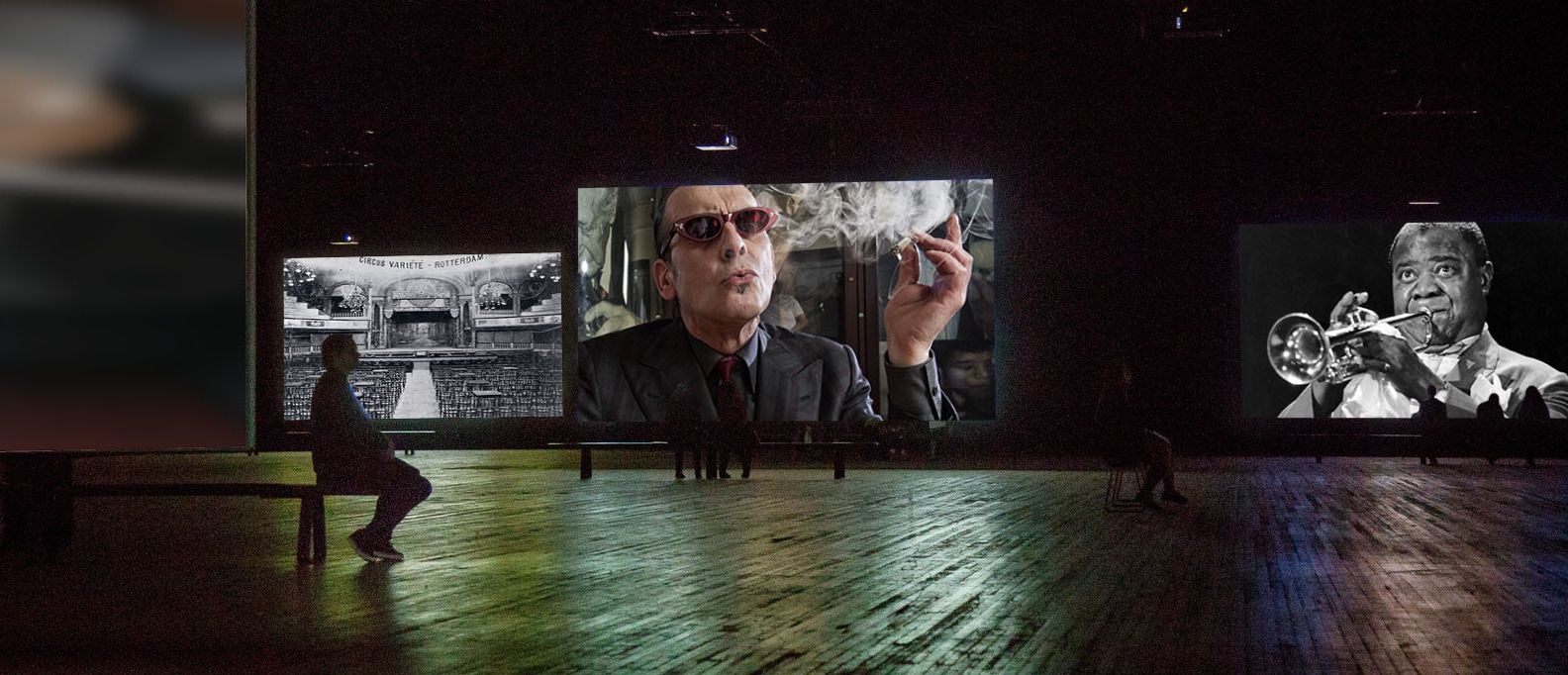
Jazz is…. is the history of jazz in Rotterdam in seven parts, each covering a period of this history. Seven self-contained time segments with overlapping sequences that form a mutual connection. We use a documentary format with archive material, music and a narrator has been chosen for each part.
Jazz is…. Is a cinematographic documentary where we can switch between the different narrative layers, for example by using split screen. With the seven parts of a maximum of 15 minutes each, we want to provide a linear narrative.
Baken van Hoop 2009
The Portrait 'Baken of Hope' follows Piet Boekhout, as chairman of the Albeda College. Together with Pieter Winsemius and Roel in 't Veld, he shapes vocational education.
Feijenoord (tussen kade en kuip) 1983
A film about the sports club Feyenoord and its home base Rotterdam-Zuid, two inseparable aspects of the left bank of the Maas.
The film follows the history of Feyenoord over 75 years in relation to its social function, from the amateurs of the Afrikaanderplein to winning the World Cup; from the South as a polder to a world port.
The film focuses on the people behind this club: the supporters, the players, the board members and the friends of... each with a different starting point.